Templeton Religion Trust
From Optimism to Alarm: Contrasting Takes on Existential Risk
Led by Professor Caroline Tee and funded by Templeton Religion Trust, fieldwork has begun on a groundbreaking project exploring how Muslim communities in France and the UK engage with and respond to existential risk such as climate change, pandemics, technological disruption or nuclear war.
At its heart is a simple idea: problems facing all of humanity should be addressed by all of humanity — and diverse voices make for better solutions.
The field of existential risk studies is currently dominated by western, secular, scientific thinking. This project offers something different: perspectives rooted in other values, other assumptions, and other questions.
The methodology is called theologically-informed ethnology. Anthropologists are embedded in Muslim communities, living alongside them as participant observers.
Because secular conditions differ significantly between France and the UK, the research design allows those differences to be studied side-by-side.
The team includes Muslim theologians who advise on Islamic traditions — beliefs, values, codes, and concepts of knowledge — giving anthropologists sharper insight into how Muslim communities define and engage with existential risk.
For now, the narrative is one of vision, intent, and method — with potentially significant outcomes to follow.
Alongside the research, the team is curating a comprehensive multimedia library of expert insights and opinions serving as a promotional piece for the online resource — of particular interest to Muslim leaders and academics.
Psychologically, the challenge is to overcome western secular conditioning. Many assume existential risks are modern problems needing modern, scientific solutions — and dismiss religious perspectives as outdated or irrelevant. Western narratives can be especially hostile to Muslim ideas.
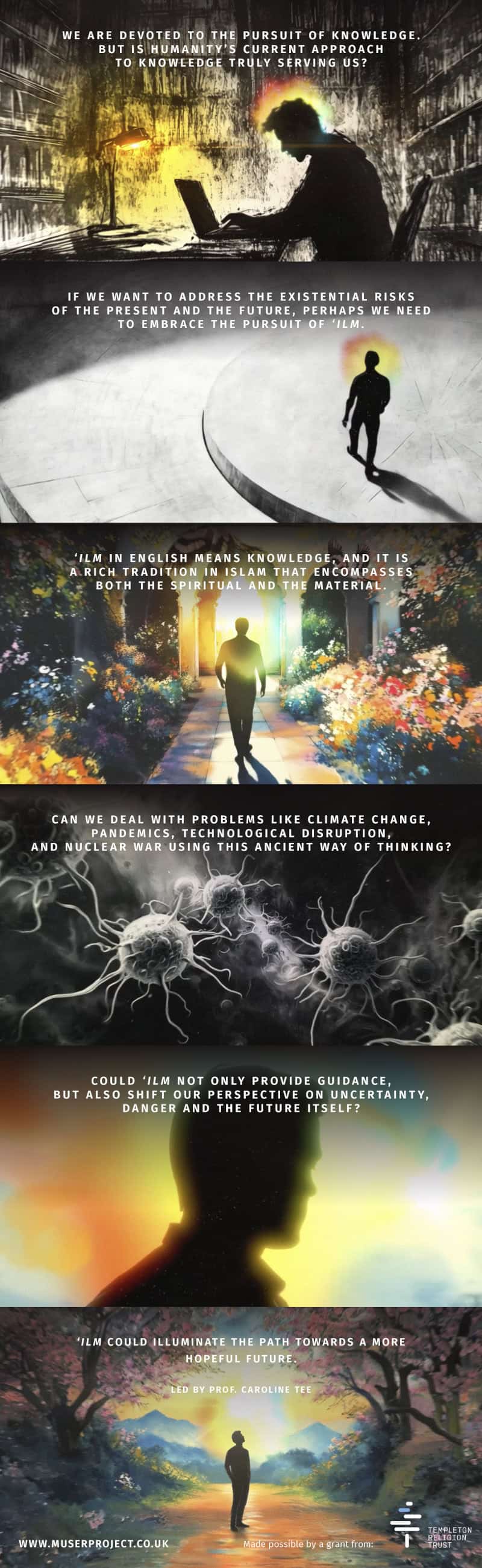
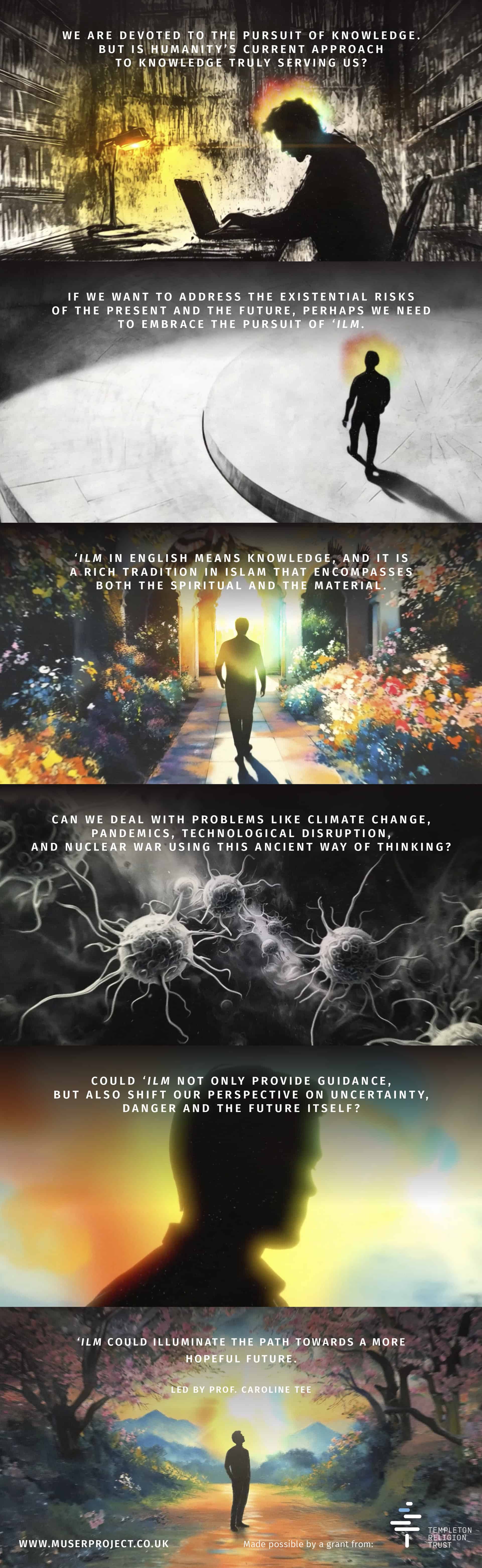
But if we want to address the existential risk of the present and the future, we can all benefit from different perspectives. By embracing the pursuit of ‘ilm, a rich tradition in Islam that encompasses both the spiritual and material we can shine a different light and rethink what we call risk.
Existential risk studies are a western, secular, scientific monoculture — and have yet to produce many effective solutions. Science doesn’t have a monopoly on wisdom.
We already know diversity of thought leads to more imaginative and effective problem solving.
The Covid pandemic showed how values-based approaches can drive radical action and change. The Islamic tradition and the role of ‘ilm offers its own questions, first principles, and priorities. Studying these deeply — in anglophone and francophone communities — could open the door to a richer, more inclusive conversation about the risks we all face and provide guidance, shifting our perspectives and offering a broader and deeper approach.
For lasting stability in how humanity approaches existential risk, something will need to change. For example, secular audiences might become more open to wisdom from other traditions, or new generations could emerge with a broader view of what counts as knowledge.
The future of risk studies, like the future of religion remains an open question. Where it evolves from here — moving towards a more inclusive pluralism or narrower monoculture — is up to us.